
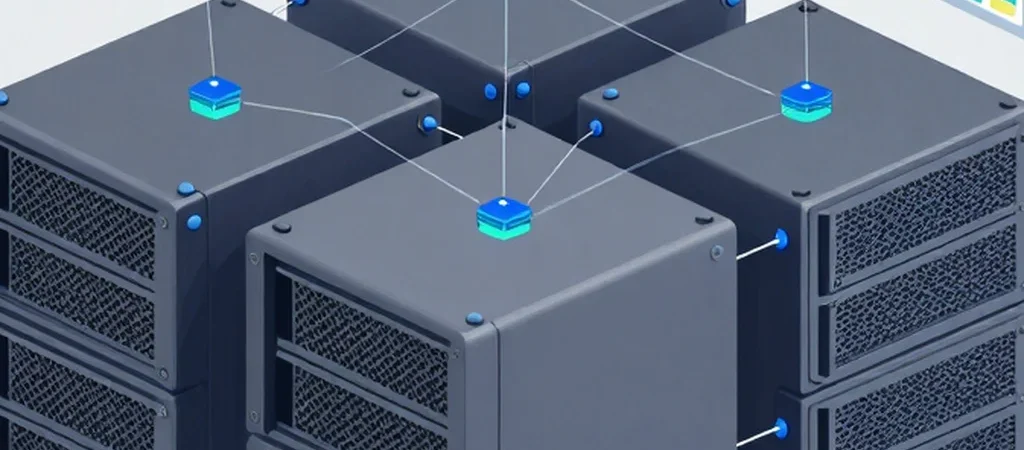
Hyperconverged infrastructure can sound like a label you learn for an exam and promptly forget. It becomes easier to place when you picture compute and storage resources managed together through software across a cluster of nodes. The useful question is not only what the term expands to, but what changes for the person operating the environment.
The basic idea
In a hyperconverged design, software coordinates infrastructure resources that might otherwise be managed as separate systems. Nodes contribute resources to a cluster, and the software layer provides a way to manage those resources as part of a broader environment. The exact architecture and available functions depend on the platform and its configuration.
What the term leaves out
The word does not tell you how a particular workload is sized, how data is protected, or what happens when a component or network path fails. Those questions need answers from the design, configuration, and operational documentation—not from the category name alone. When reading a product page or diagram, look for the specific behavior being described.
Connect it to the interface
Prism gives administrators a place to view and manage aspects of a Nutanix environment, but a screen is only one layer of the explanation. Pair a glossary definition with an illustrated diagram or a carefully labeled interface simulation, then trace how the concept appears in an administrative task. That combination turns a memorized term into something you can recognize in context.